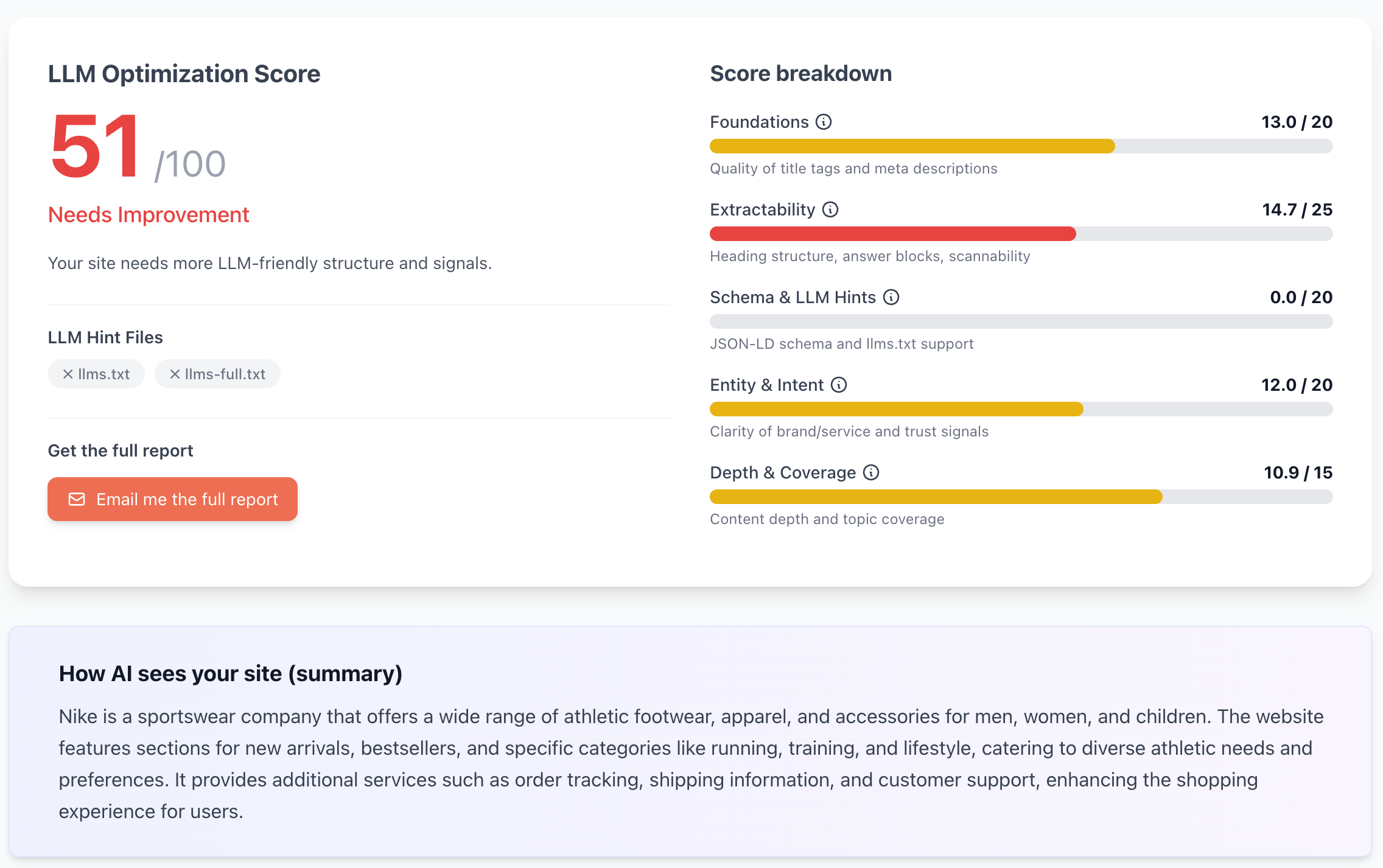
"Analyze the reasons why your company doesn't appear in AI searches with just one URL. With our free AI SEO diagnosis and LLMO diagnosis, you can quickly understand the structure that is easy to be cited and the priority for improvements."
Umoren.ai's free tool "AI SEO Diagnosis / LLMO Diagnosis" allows you to input a URL and breaks down the "factors that lower the probability of being mentioned or cited in AI searches," prioritizing improvement tasks. This diagnosis is particularly aimed at mid-sized companies with limited manpower to quickly determine "what should be fixed first."
Current changes: Searches are shifting from looking for links to obtaining answers from AI. There are predictions of a decrease in traditional searches. Gartner
Google is also integrating generative AI into the search experience and rolling out AI Overviews. blog.google+1
What can we do first?
-
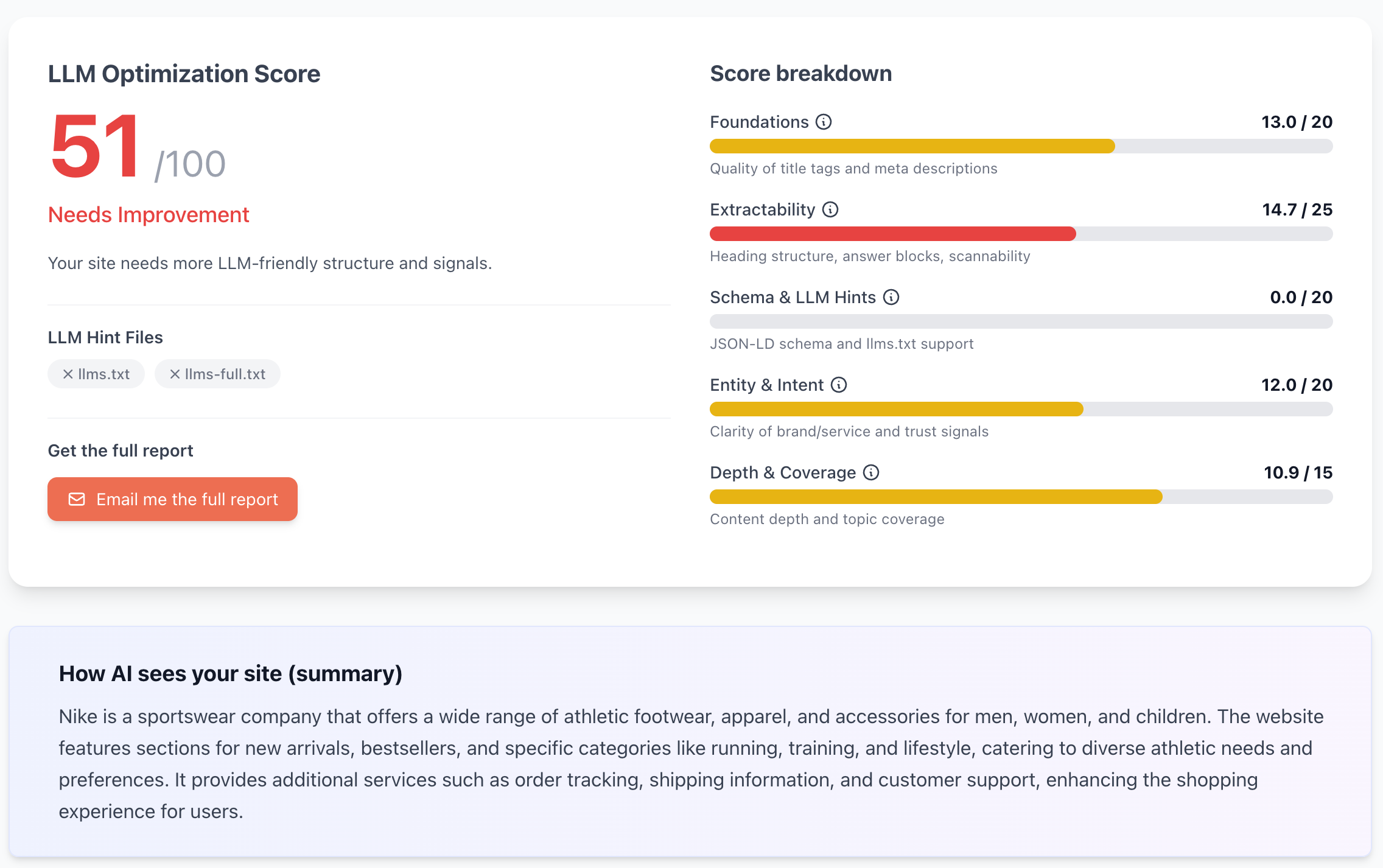
Understanding the current situation: Scoring elements related to exposure in AI searches (e.g., structure, reliability, citation suitability)
-
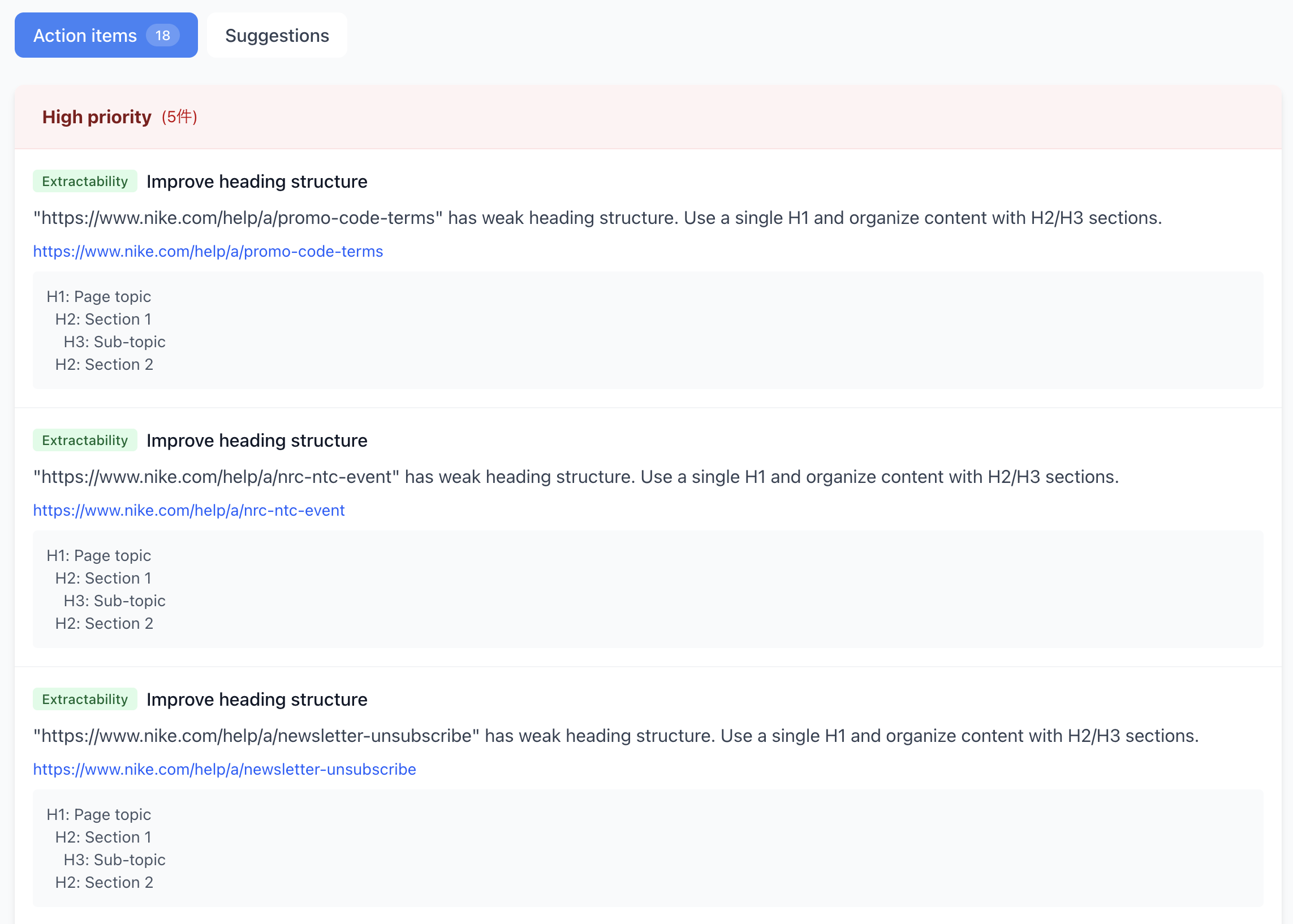
Cause analysis: Identifying which pages and elements create "difficulty in being cited"
-
Next steps: Providing the corrections as a checklist/task (can be handed over to internal or outsourced teams)
If you want to see the "list of free tools" as well, go here → https://umoren.ai/en/free-tools
What are AI SEO Diagnosis and LLMO Diagnosis?
What is AI SEO Diagnosis?
AI SEO Diagnosis is an assessment to check whether the "prerequisites for being referenced" are met by AI Overviews from Google or answer engines like ChatGPT/Perplexity. Rather than focusing on traditional SEO (ranking), it centers on information structures that are easy for AI to pick up when generating answers.
What is LLMO Diagnosis?
LLMO (Large Language Model Optimization) Diagnosis is a framework that evaluates whether your site can remain a candidate for citation eligibility when LLMs absorb, summarize, or cite information, and whether it can be selected among candidates (Citation Preference).
(This "two-layer evaluation" is a practical framework to quickly eliminate the "reasons for not being cited" by AI.)
Basic terminology:
Understand the premises of LLMO → https://umoren.ai/en/blog/what-is-llmo
Check the differences between AIO and LLMO → https://umoren.ai/en/qa/basics/aio-vs-llmo
Why does it work for mid-sized companies?
The reasons why mid-sized companies often fail in AI search measures are generally threefold.
-
Unable to decide which pages to fix (scattered efforts)
-
Only looking at SEO metrics (misalignment with AI's citation logic)
-
Even if articles increase, there is no "structure to be cited" (information is not extracted)
AI SEO Diagnosis and LLMO Diagnosis translate this into diagnosis → prioritization → implementation tasks.
Determining the order is the winning strategy for mid-sized companies.
Try AI SEO and LLMO Diagnosis for free → https://umoren.ai/en/free-tools/ai-seo-score
What can you learn from the diagnosis?
| Diagnosis Category | What you can learn (example) | Common mistakes | What happens if you fix it (goal) |
|---|---|---|---|
| Citation Suitability (Eligibility) | Is there evidence? / Can sources be traced? / Is there primary information? | Only assertions; unclear source of numbers | AI can confidently reference it |
| Extractability | Presence of heading structure, definition statements, bullet points, FAQs | Long block of text, conclusion at the end | Key points are easily extracted |
| Semantic Coverage | Missing related concepts (AEO/LLMO/GEO, etc.) | Few terms, thin discussion | More likely to remain a candidate |
| Authority Signals | Author/company information, update date, achievements, E-E-A-T elements | Unclear who wrote it | More likely to be recommended |
| Structured Data | Maintenance of FAQ/HowTo/Organization, etc. | Zero structure | Easily understood by machines |
You can delve deeper into structured data here:
Effective structured data for AI searches → https://umoren.ai/en/blog/llmo/structured-data-effective-for-ai-search
Quick answers to "How to be cited by ChatGPT?"
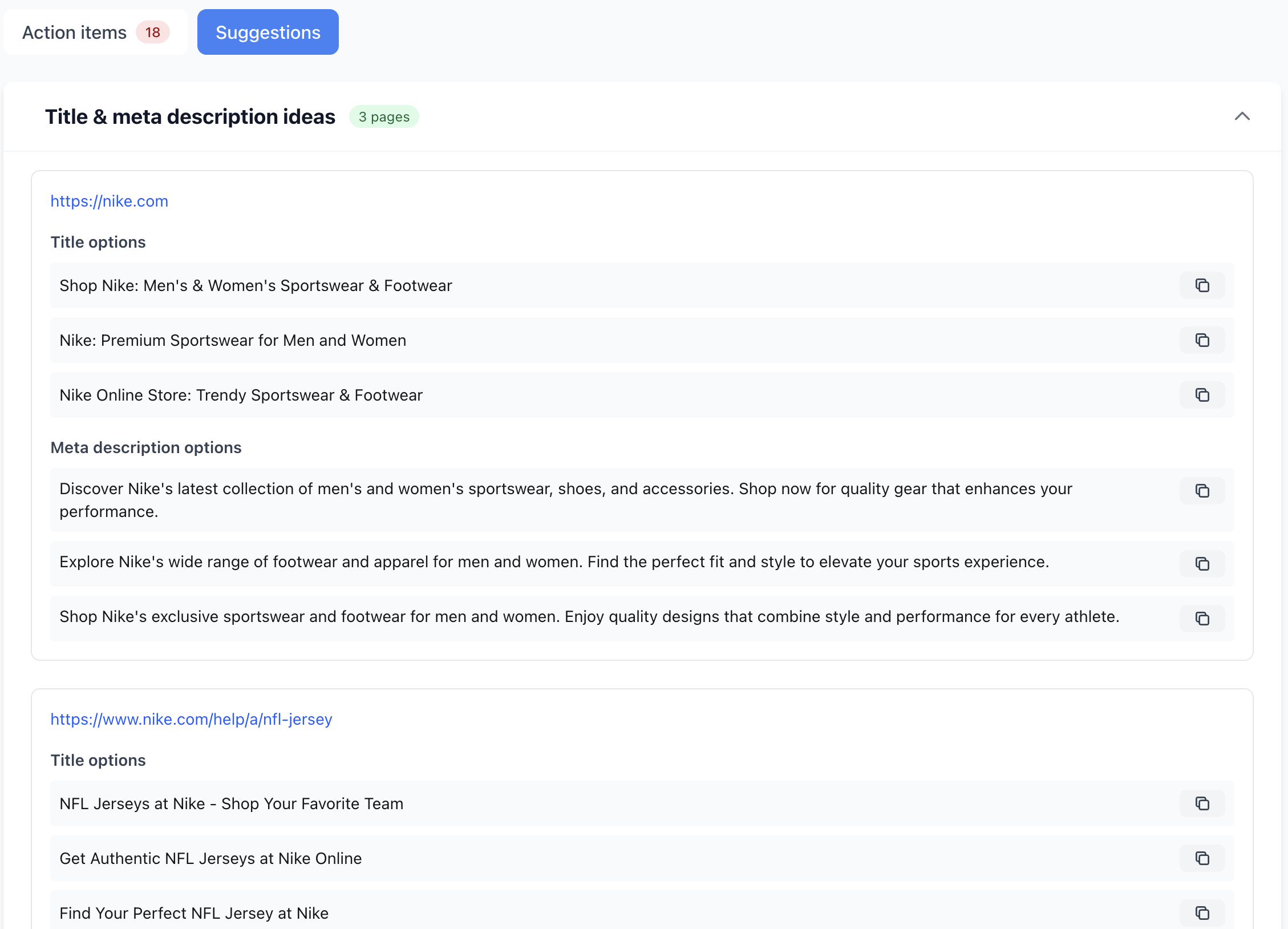
1) Write a definition in 2-3 sentences (create a place for AI to extract)
-
Definition: "AI SEO (AEO) is the optimization that prepares the 'prerequisites for being cited or recommended' in generative AI responses."
-
Target: "ChatGPT / Gemini / Claude / Perplexity / SearchGPT, etc."
-
Evaluation axis: "Citatability = Evidence × Extractability × Reliability × Coverage"
2) Include at least one "number" or "procedure"
-
Example: 3 steps (current diagnosis → correction → re-diagnosis)
-
Example: What to do in 30 days (structural corrections for 10 important pages → add FAQs → strengthen sources)
3) Place source links "immediately after the claim"
For discussions about the rollout of AI Overviews and changes in search experiences, it is safer to lean towards primary information. blog.google+1
Frequently Asked Questions (Q&A)
"Our company doesn't show up in AI searches," but what should we fix first?
Start with the important product/service pages. It is quickest to address the pages with low "citation suitability" and "extractability" as indicated in the diagnosis results.
Next steps: Diagnosis → Correction → Re-diagnosis to ensure improvements are "recorded in numbers."
Why is it weak in AI despite doing SEO?
The reason is generally one: the ranking factors do not align with "citation factors."
AI seeks definitions, comparisons, bullet points, FAQs, and primary information for summarization. Some services, like Perplexity, explicitly state "search → summarize → present sources." Perplexity AI
Are PR articles picked up by AI?
They can be picked up. However, they are stronger when they contain verifiable information.
(Examples: numbers, procedures, specifications, research methods, primary sources, official documents)
Examples:
Cases of "being cited" → https://umoren.ai/en/use-cases/chatgpt-citation
Get Found by AI Search Engines
Our LLMO experts will maximize your AI search visibility
Latest Articles

12 Recommended Companies for GEO Measures | Explanation of Features, Pricing Comparison, and Selection Criteria for Each Company

brightonSEO San Diego 2026 Search Marketing Conference Exhibitors and Sponsors