How to Visualize ChatGPT Query Fan-Out

What searches does ChatGPT run behind the scenes when it answers? Use umoren.ai's free tool to see real query fan-out and how the AI gathers information.
See the Search Process AI Actually Runs
Generative AI answers are often called a black box. Users see only the final response, and almost never what searches ran behind the scenes.
In practice, ChatGPT runs multiple search queries in stages before it answers. That internal search process is called query fan-out (query fan-out).
umoren.ai has released a free tool that visualizes the search queries ChatGPT actually runs internally.
This article covers how to use the tool, the search structure we observed, and how AI gathers information.
What Is the ChatGPT Query Fan-Out Visualization Tool?
Enter the same prompt you would give ChatGPT, and the tool shows the search queries (query fan-out) that ran internally.
The important point: this data comes from real search logs, not guesses or simulations.
How to Use the Tool
The flow is simple.
1. Enter the prompt you want to inspect

For example, you might enter a prompt like this:
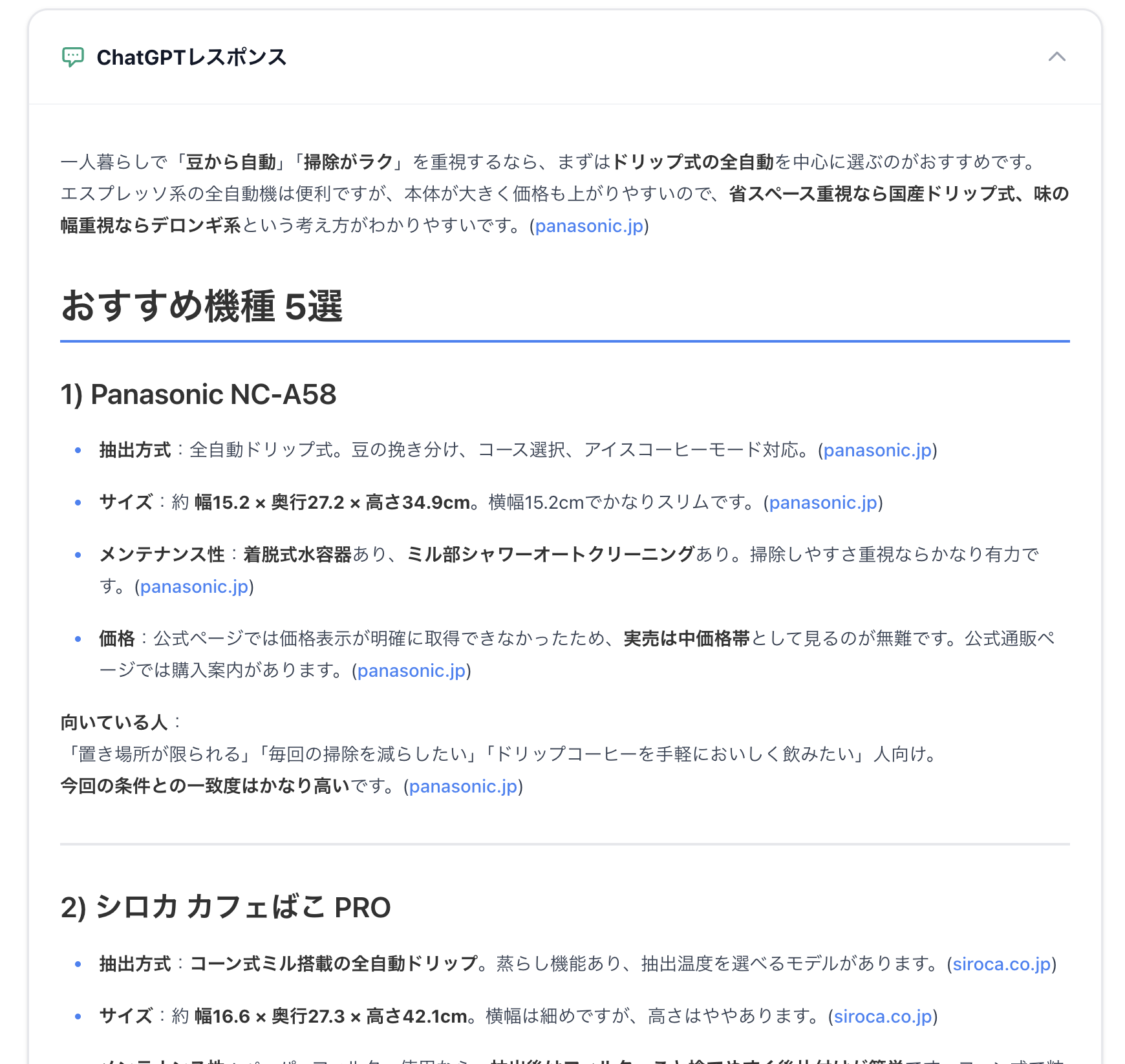
“I am looking for a coffee maker for living alone. Ideally, it should brew automatically from beans and be easy to clean. Please recommend 3 to 5 models along with their features (extraction method, size, maintenance, price).”
2. Click "Get ChatGPT Fan-out Queries"
The tool then lists the search queries ChatGPT ran internally.
ChatGPT's Query Fan-Out Structure
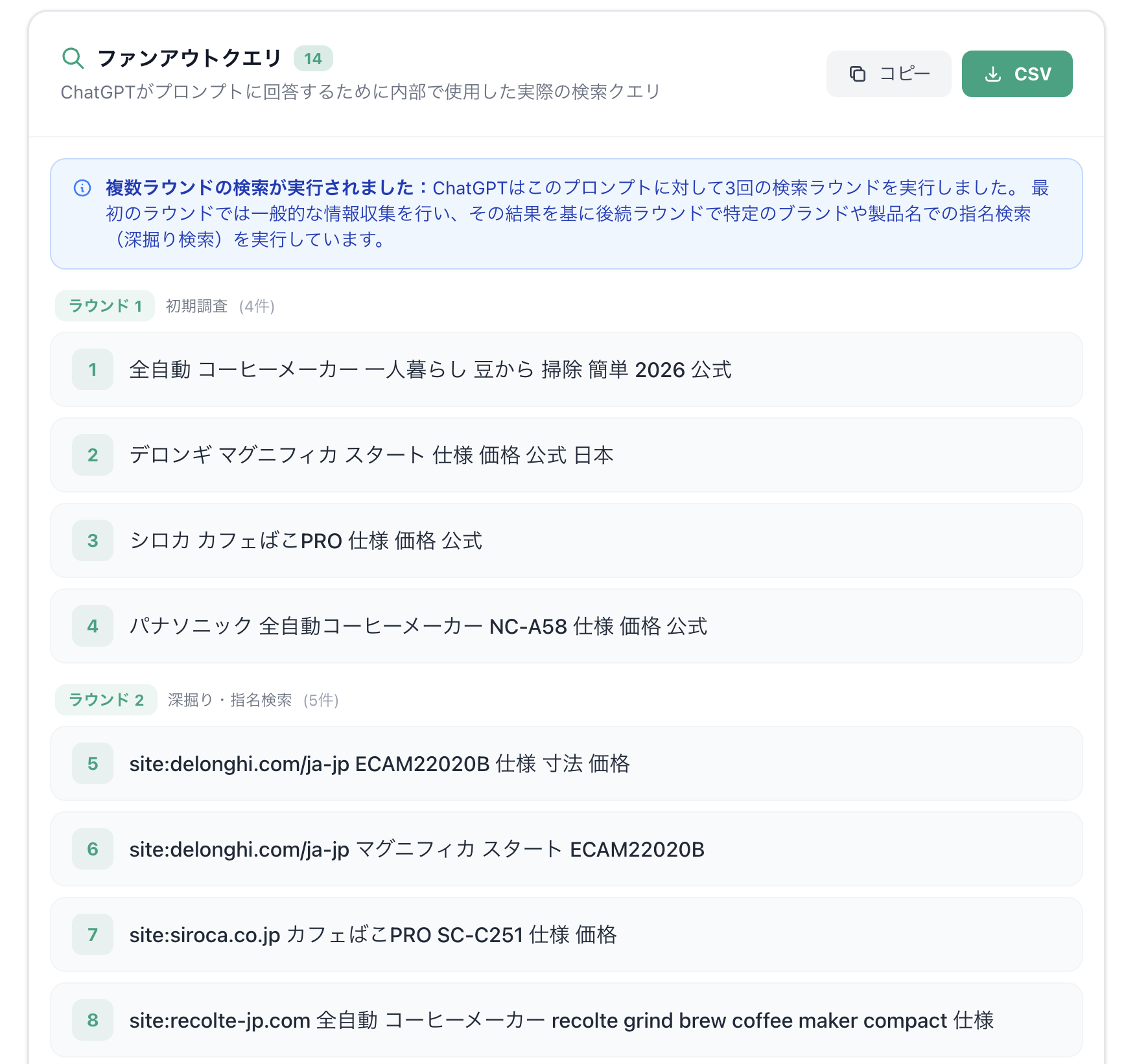
In the tool, ChatGPT's searches clearly run across multiple rounds rather than a single pass. In this example, there were three rounds.
Round 1: Broad Exploration
The first search covers a fairly wide range.
For example, a query like:
Here the model scans product categories, products on the market, review articles, and more to pick up candidates worth comparing. Think of it as an early exploration phase to build a candidate set.
Round 2: Branded Search and Site Deep Dive
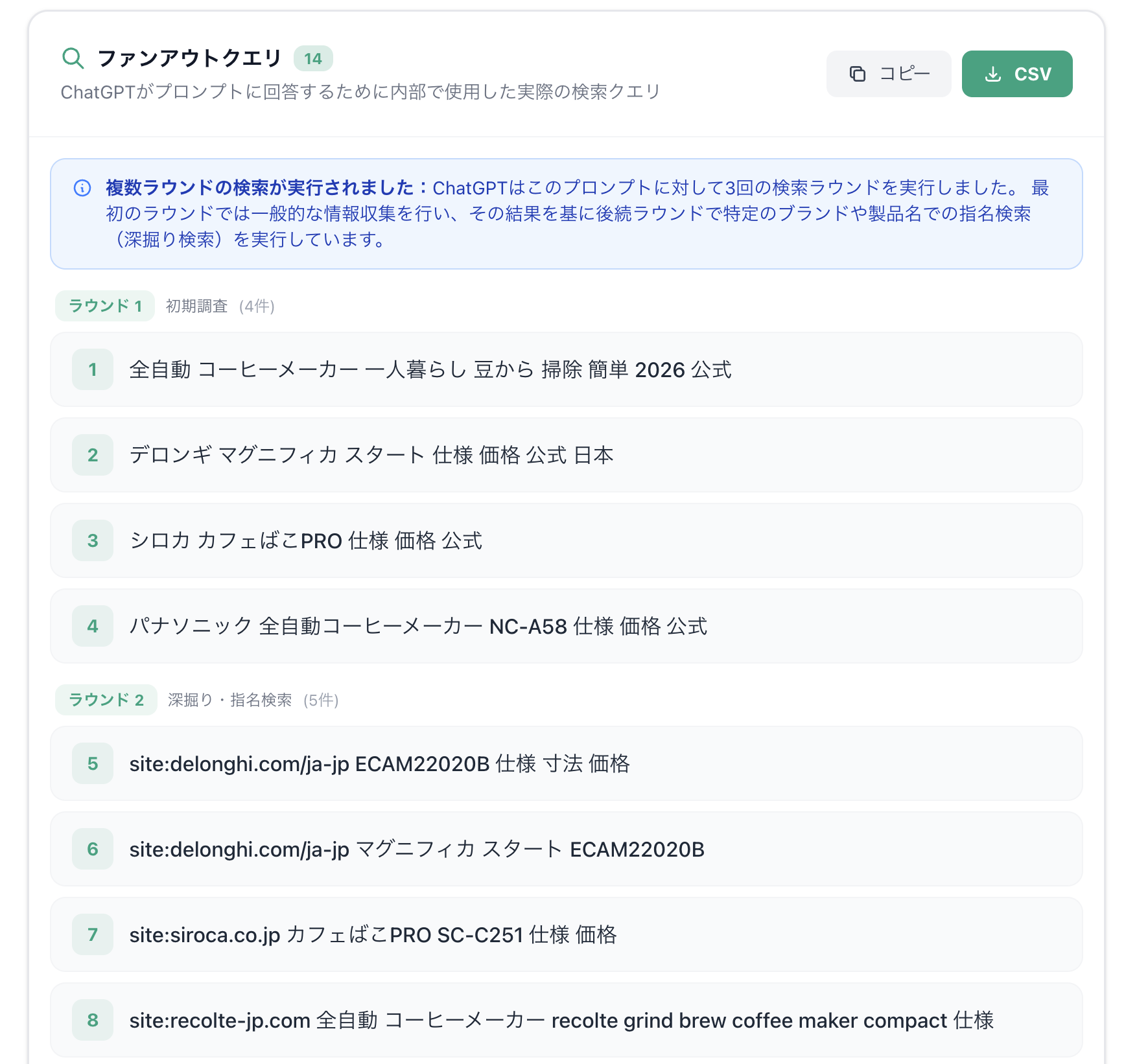
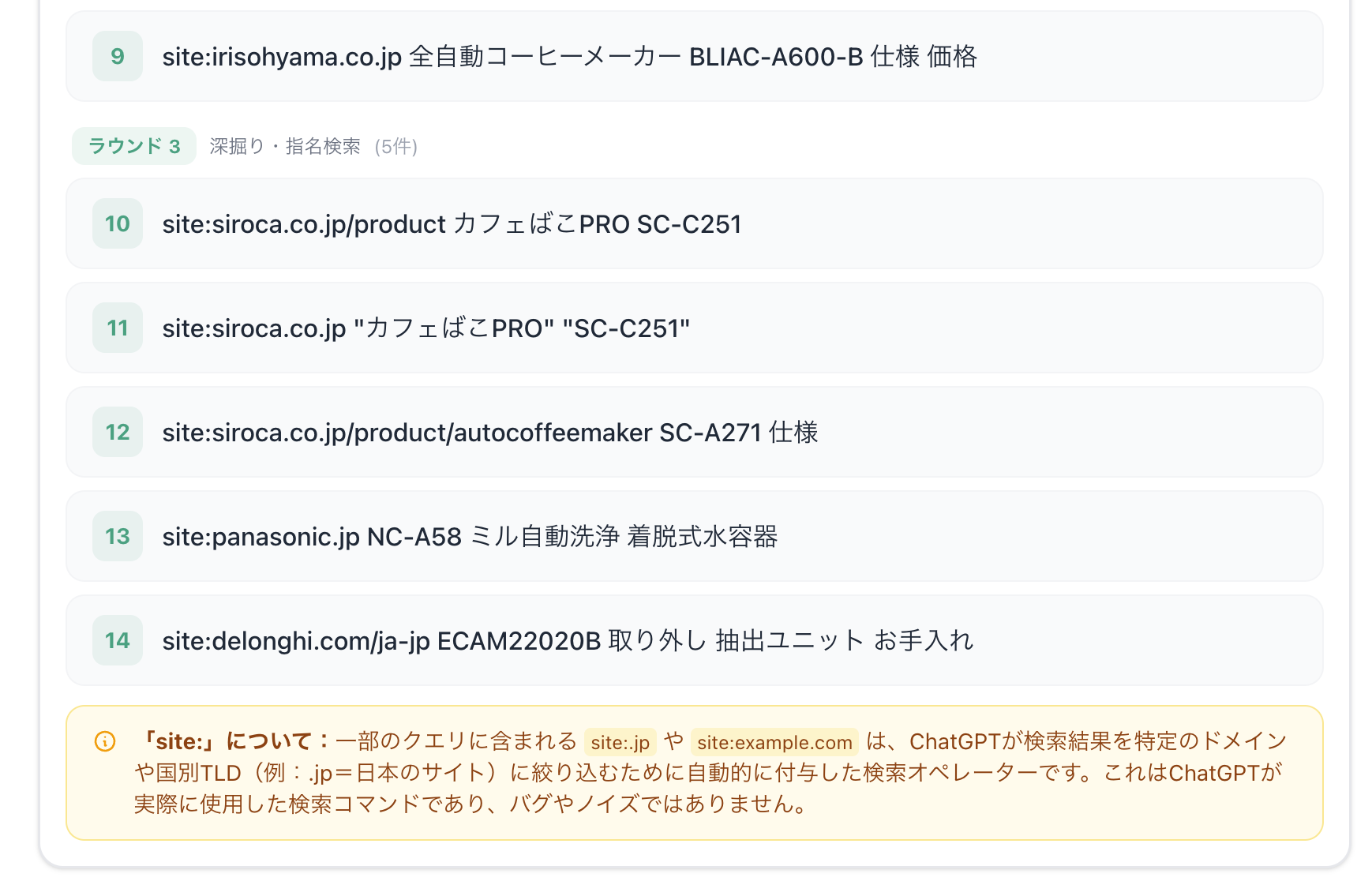
What stands out next is how sharply the search behavior changes. Queries now include concrete brand and product names such as Delonghi, siroca, and Panasonic.
After the broad pass finds candidates, ChatGPT digs into those candidates one by one.
That deep dive is not limited to branded search alone. The actual queries include site: lookups such as site:delonghi.com, site:siroca.co.jp, and site:panasonic.jp—explicitly targeting specific sites for information.
So ChatGPT's query fan-out is not just expanding related terms. It first explores candidates widely, then decides which sites to visit for the strongest options, and gathers higher-confidence information from there.
The image shows rounds 2 and 3 as separate, but structurally both belong to the same deep-dive phase. Overall, the pattern is:
Broad exploration -> Candidate extraction -> Deep dive via branded search and site targeting
In practice, a two-stage research process.
Get Found by AI Search Engines
Our LLMO experts will maximize your AI search visibility