Japan's First Large QFO Study: AI Searches Up to 33× Per Question

Japan's first large QFO study from Queue: 35,482 prompts reveal how often ChatGPT and Gemini fan out searches—and how to use that for LLMO/GEO content.
Queue (headquartered in Chuo-ku, Tokyo; Representative: Taichi Taniguchi) is releasing a large-scale study of Query Fan-Out (QFO) in generative AI, run with the free QFO analysis tool from its LLMO/GEO (AI search optimization) service umoren.ai.
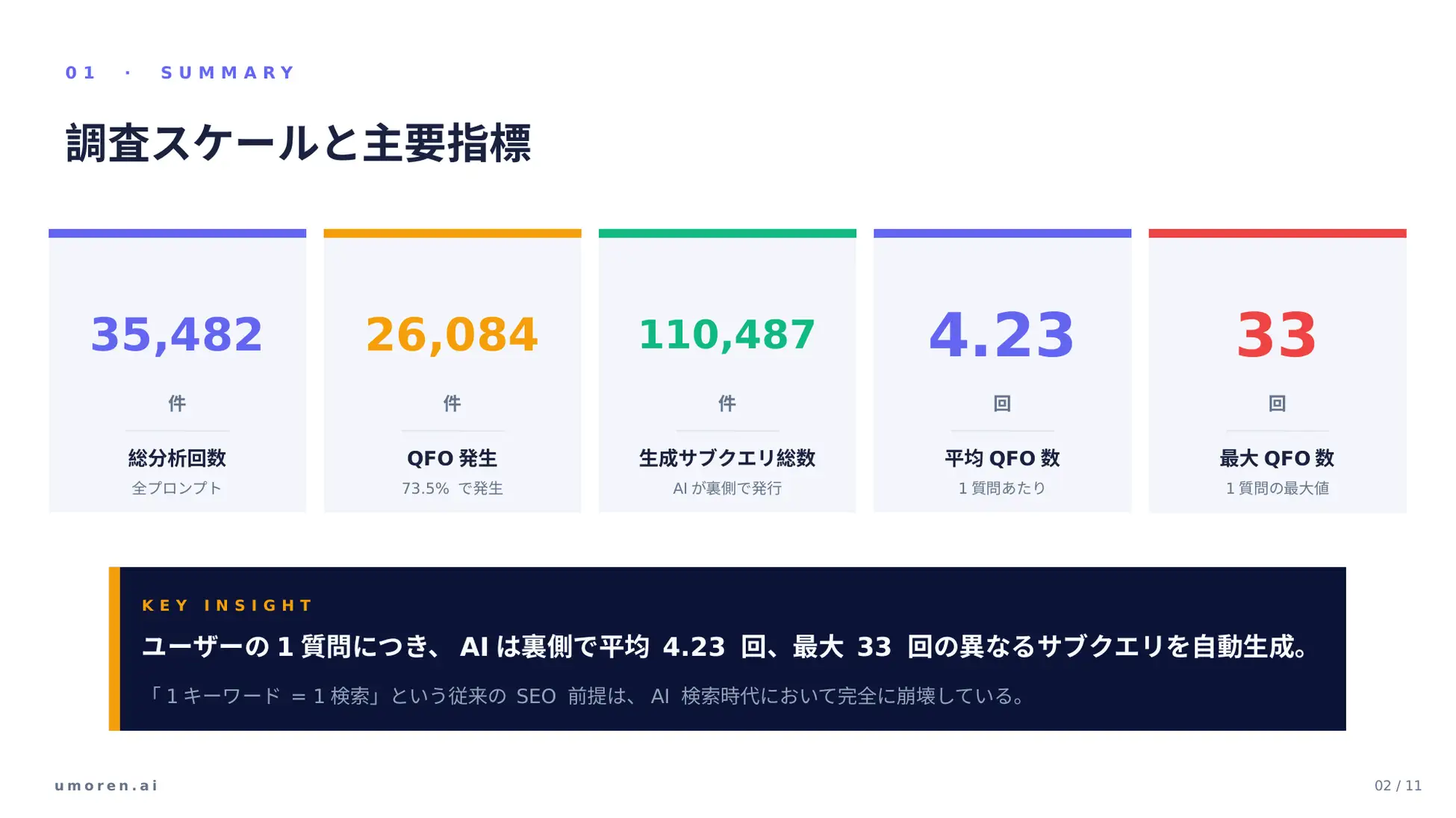
The study covered 35,482 prompts submitted between February 5 and May 27, 2026. ChatGPT and Gemini automatically fire an average of 4.23 different sub-queries, and as many as 33, behind a single user question when they gather information.
As far as we know, this is Japan's first large-scale quantitative look at QFO.
■ Why QFO matters now
When you ask ChatGPT or Gemini a question, the model quietly splits that question into multiple search queries (fan-out), runs each one, and merges the results into an answer. That process is Query Fan-Out (QFO).
Classic SEO assumed one user keyword maps to one page. In AI search, the model invents several queries behind your question—so visibility depends on which of those sub-queries retrieve and cite your content.
Japan hasn't had large-scale numbers on how often QFO runs or in what patterns. We're publishing these findings so marketers and SEO leads can ground LLMO/GEO plans in real data.
■ Study overview
| Field | Details |
| Study name | Query Fan-Out (QFO) Reality Study 2026 |
| Sample | User prompts run on the umoren.ai free QFO analysis tool |
| AI engines | ChatGPT, Gemini |
| Period | February 5 – May 27, 2026 (~3.5 months) |
| Analyses (N) | 35,482 |
| Sub-queries generated | 110,487 |
| Conducted by | Queue (umoren.ai) |
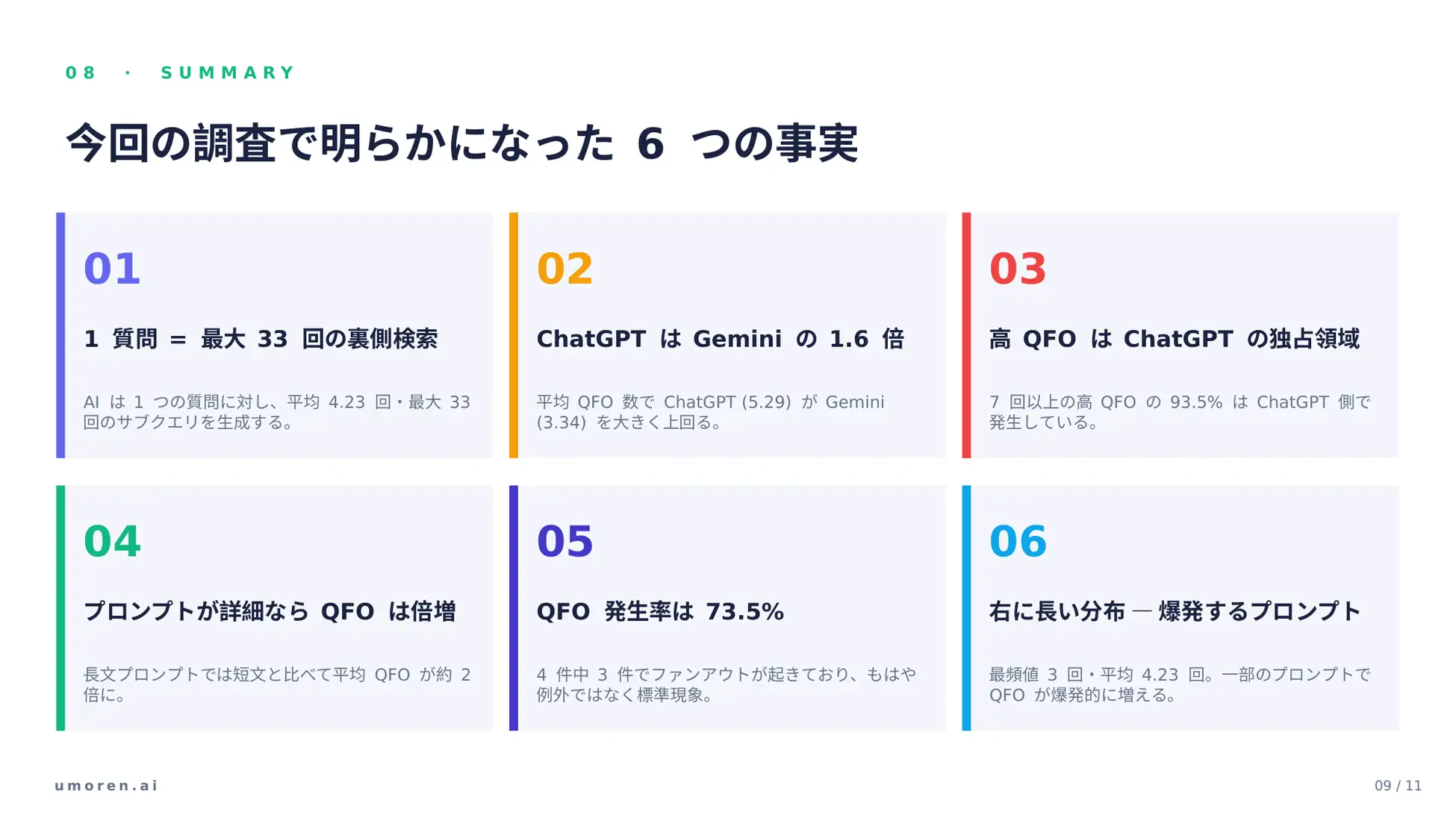
■ Six key findings
Finding 1: Behind one question, AI searches 4.23 times on average—and up to 33
Ask AI one question and it typically spins up 4.23 different sub-queries. In the heaviest case we saw 33 sub-queries for a single question—hard evidence that "one keyword = one search" no longer holds.
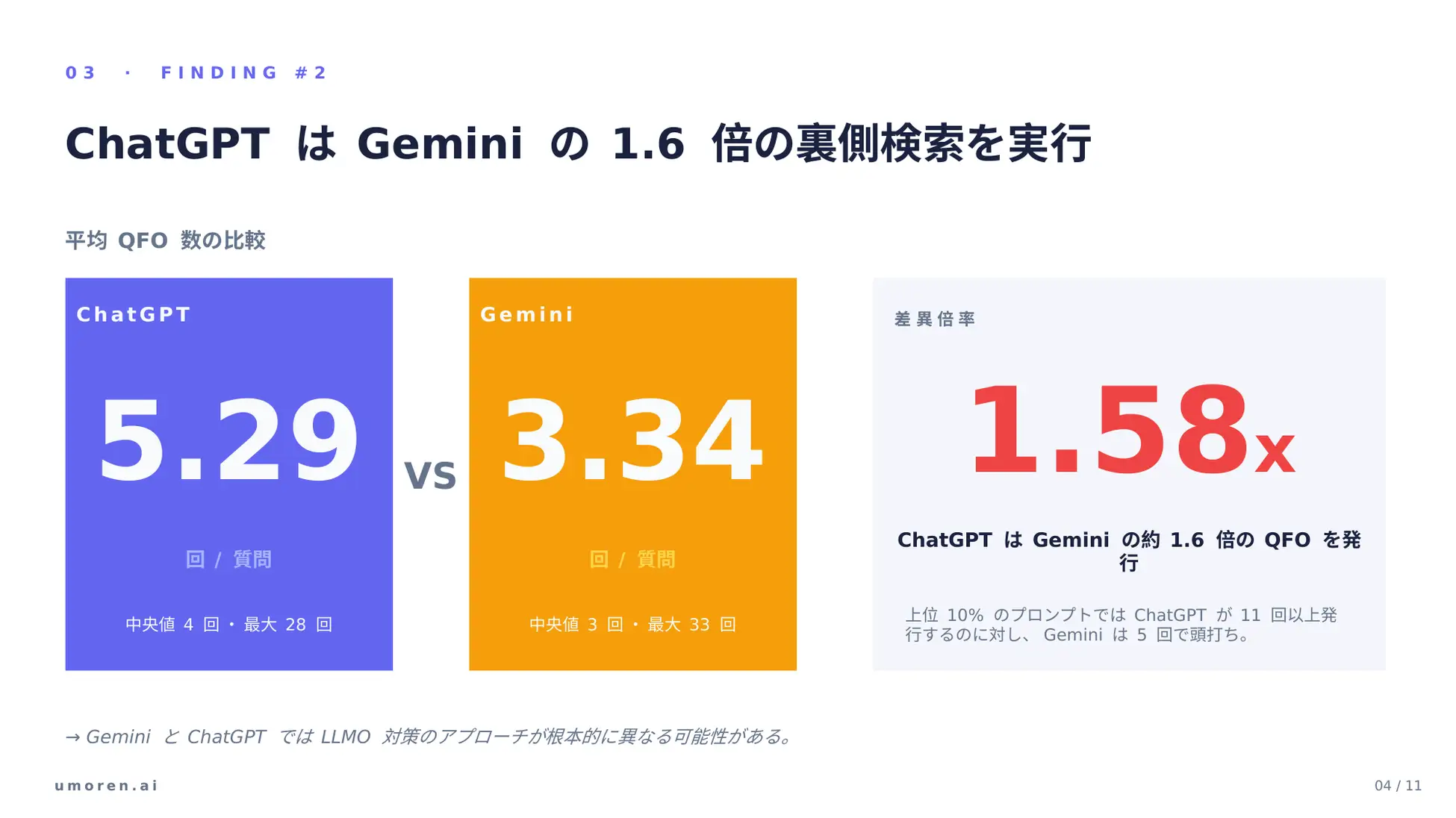
Finding 2: ChatGPT runs about 1.6× more sub-searches than Gemini
Average QFO counts: ChatGPT 5.29, Gemini 3.34. ChatGPT runs about 1.58× more back-end searches than Gemini.
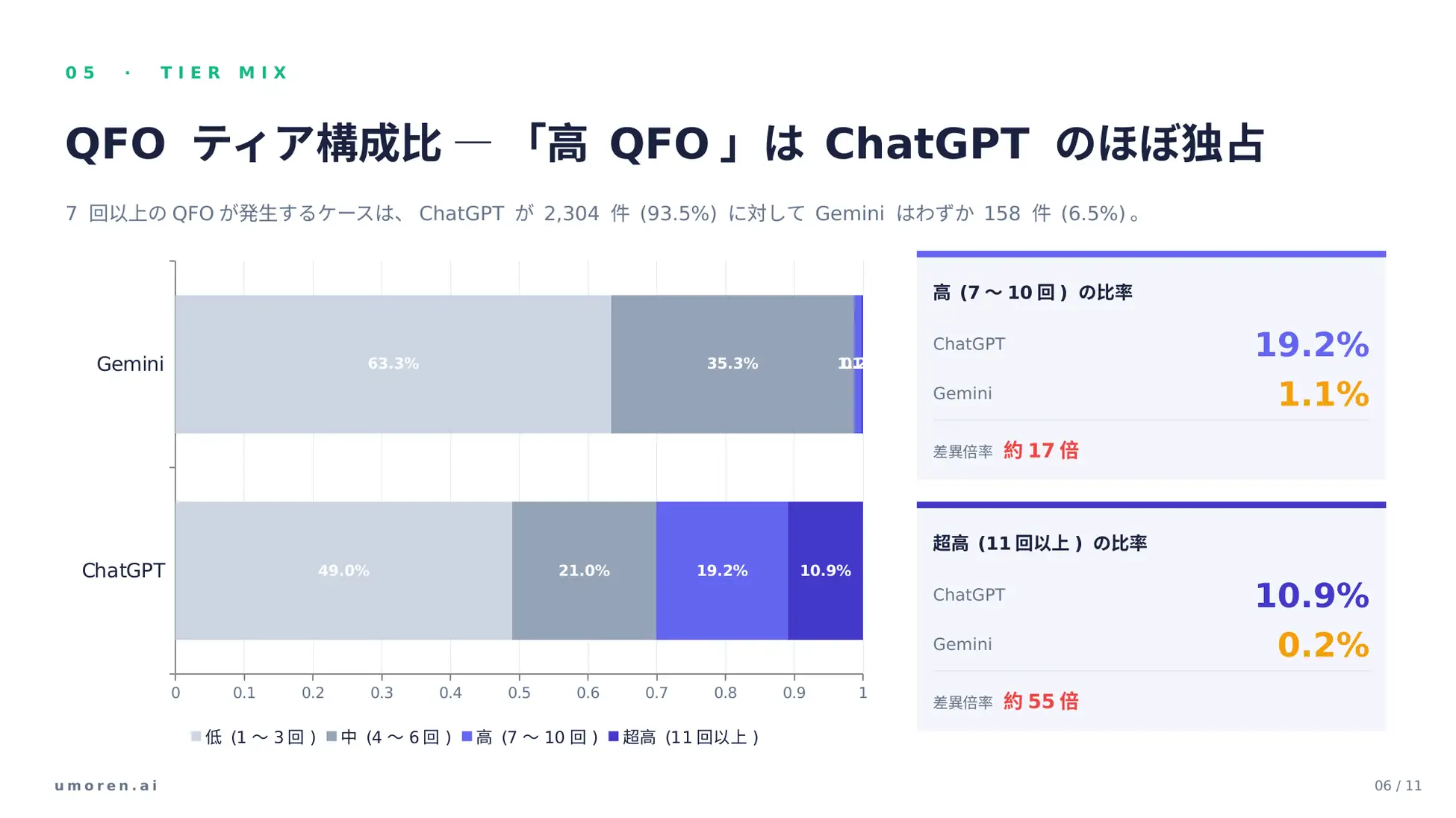
Finding 3: High QFO (7+) is almost all ChatGPT
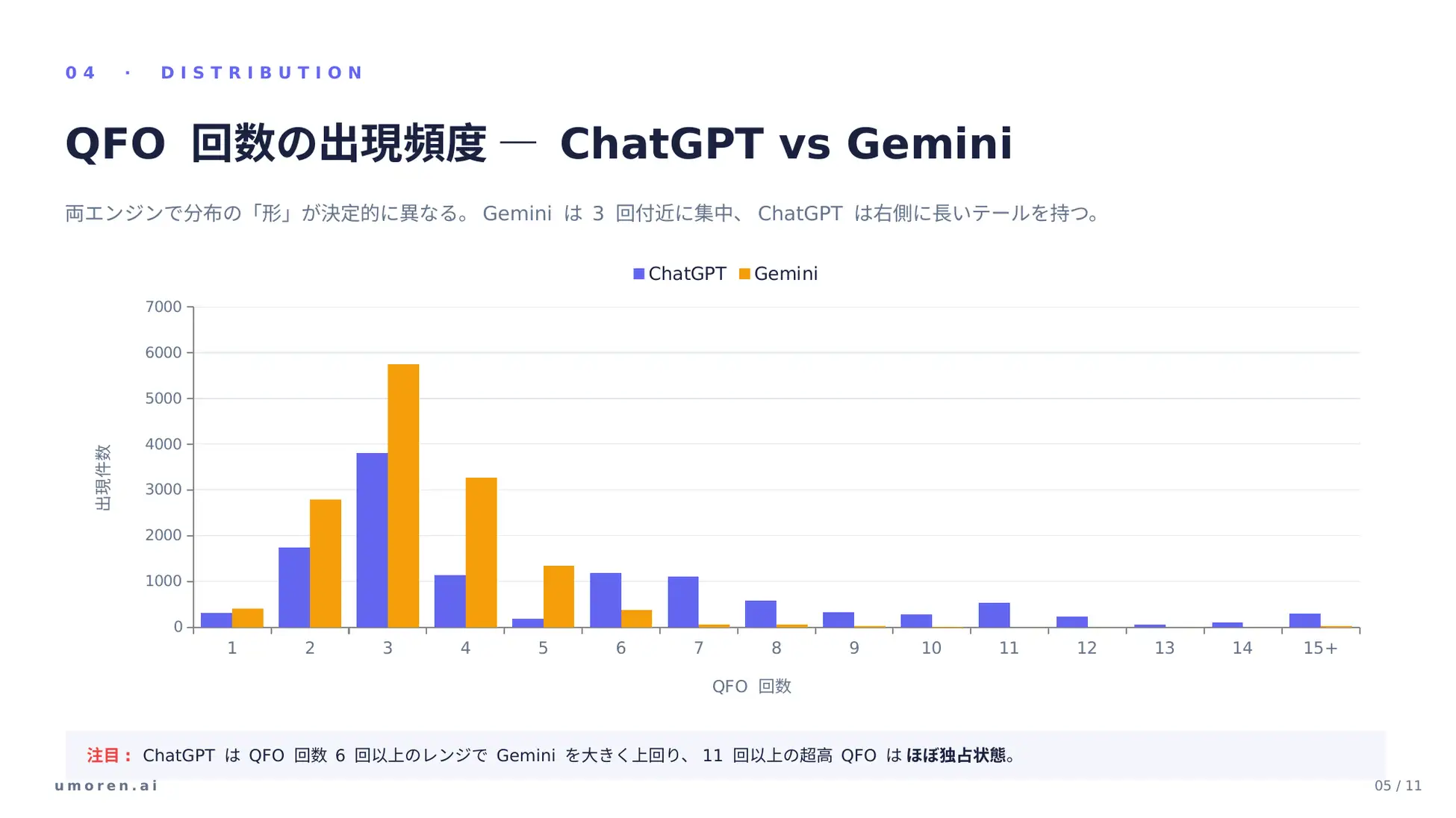
Split into four tiers, 93.5% (2,304 cases) of 7+ high-QFO prompts came from ChatGPT; Gemini was only 6.5% (158). For 11+ "super-high" QFO, the gap hits about 55×—the engines behave very differently.
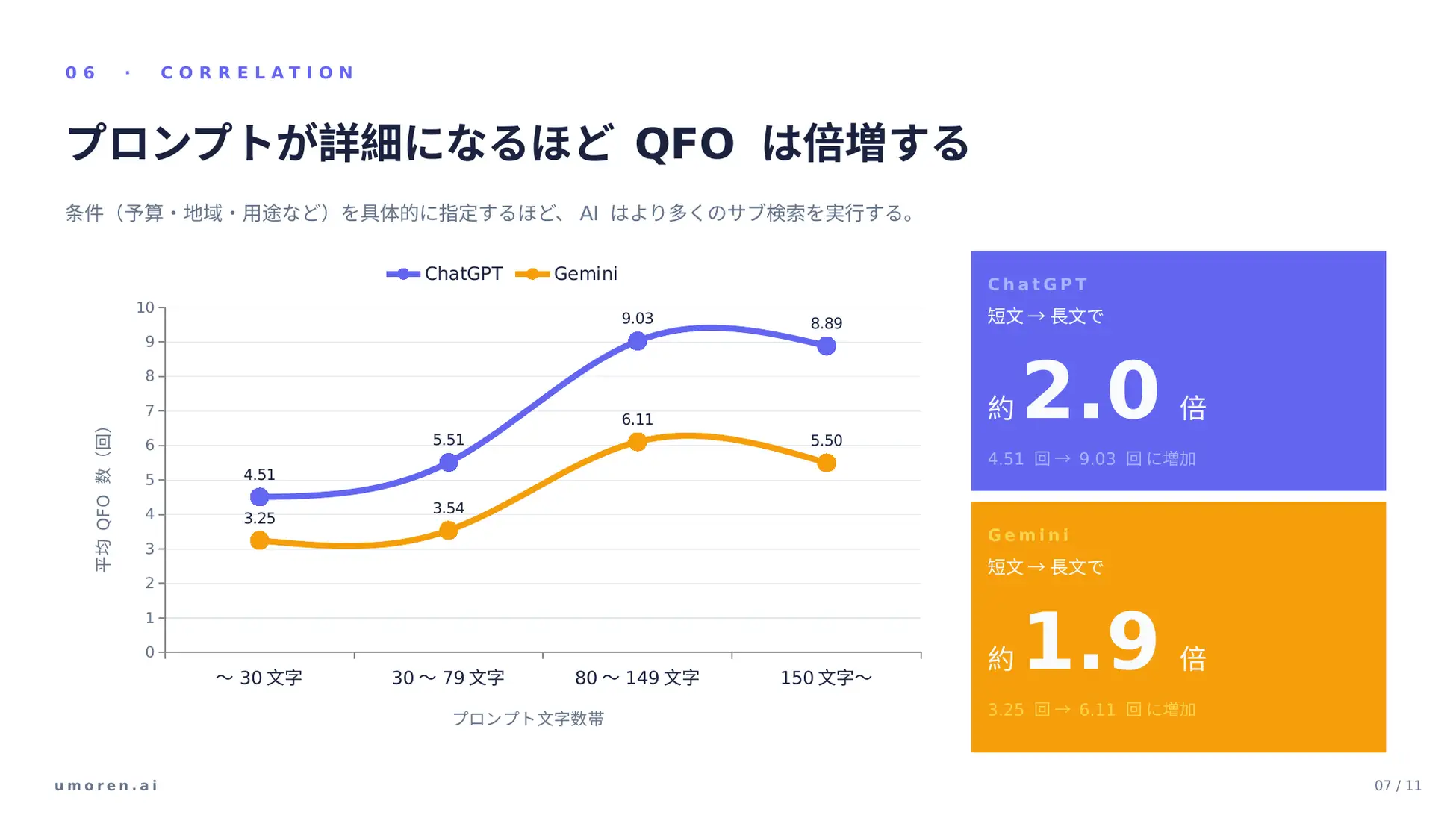
Finding 4: More detailed prompts roughly double QFO
Prompt length and QFO count move together. Add specifics like budget, region, or use case, and the model breaks each condition into its own sub-query.
-
ChatGPT: short prompts (avg 4.51) → long prompts (avg 9.03)
-
Gemini: short prompts (avg 3.25) → long prompts (avg 6.11)
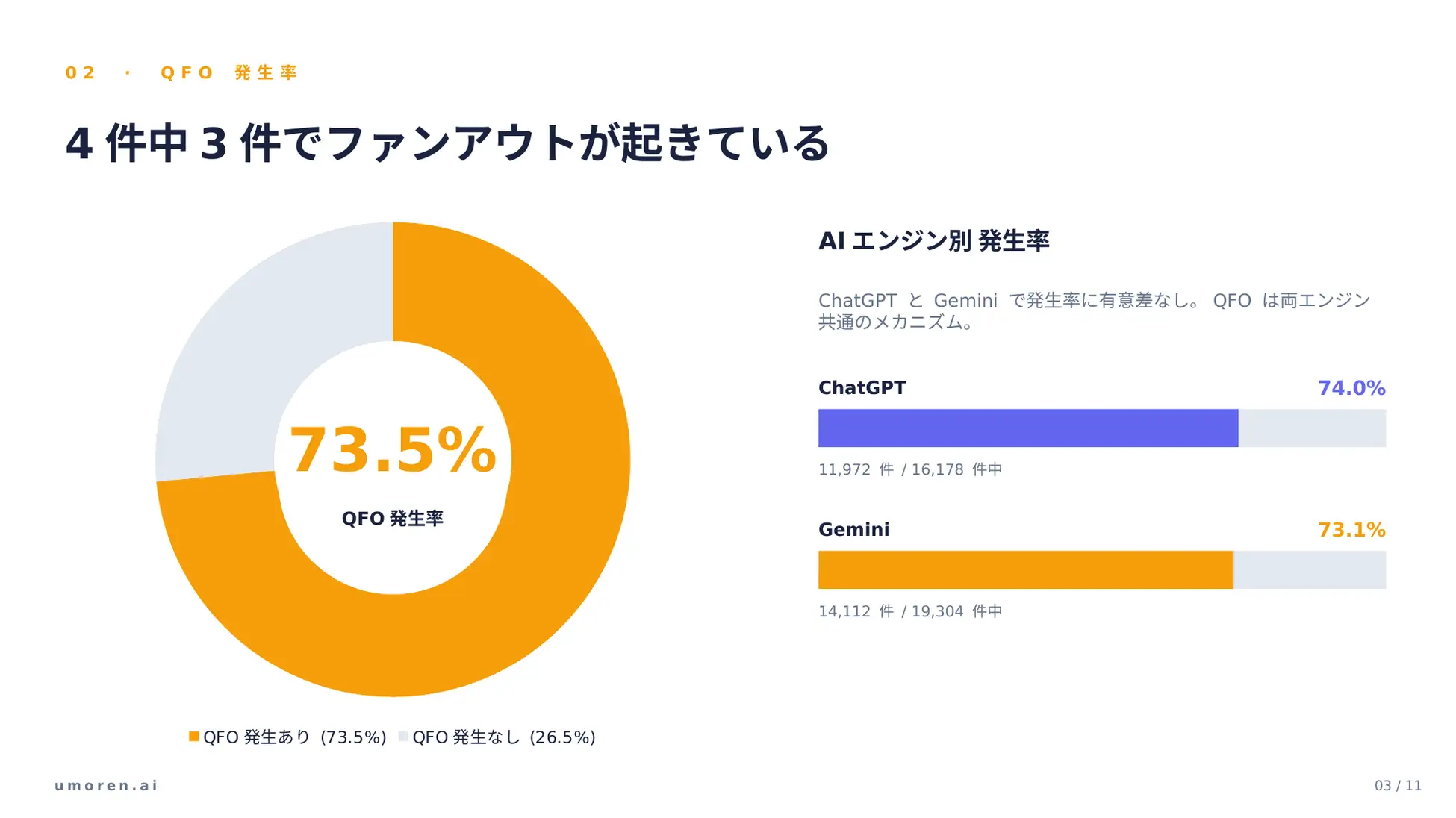
Finding 5: QFO shows up 73.5% of the time—about 3 in 4 prompts
Across all 35,482 prompts, 73.5% triggered QFO. ChatGPT and Gemini barely differ—so QFO isn't a rare quirk; it's a standard AI search mechanism.
Finding 6: A long right tail—some prompts explode QFO
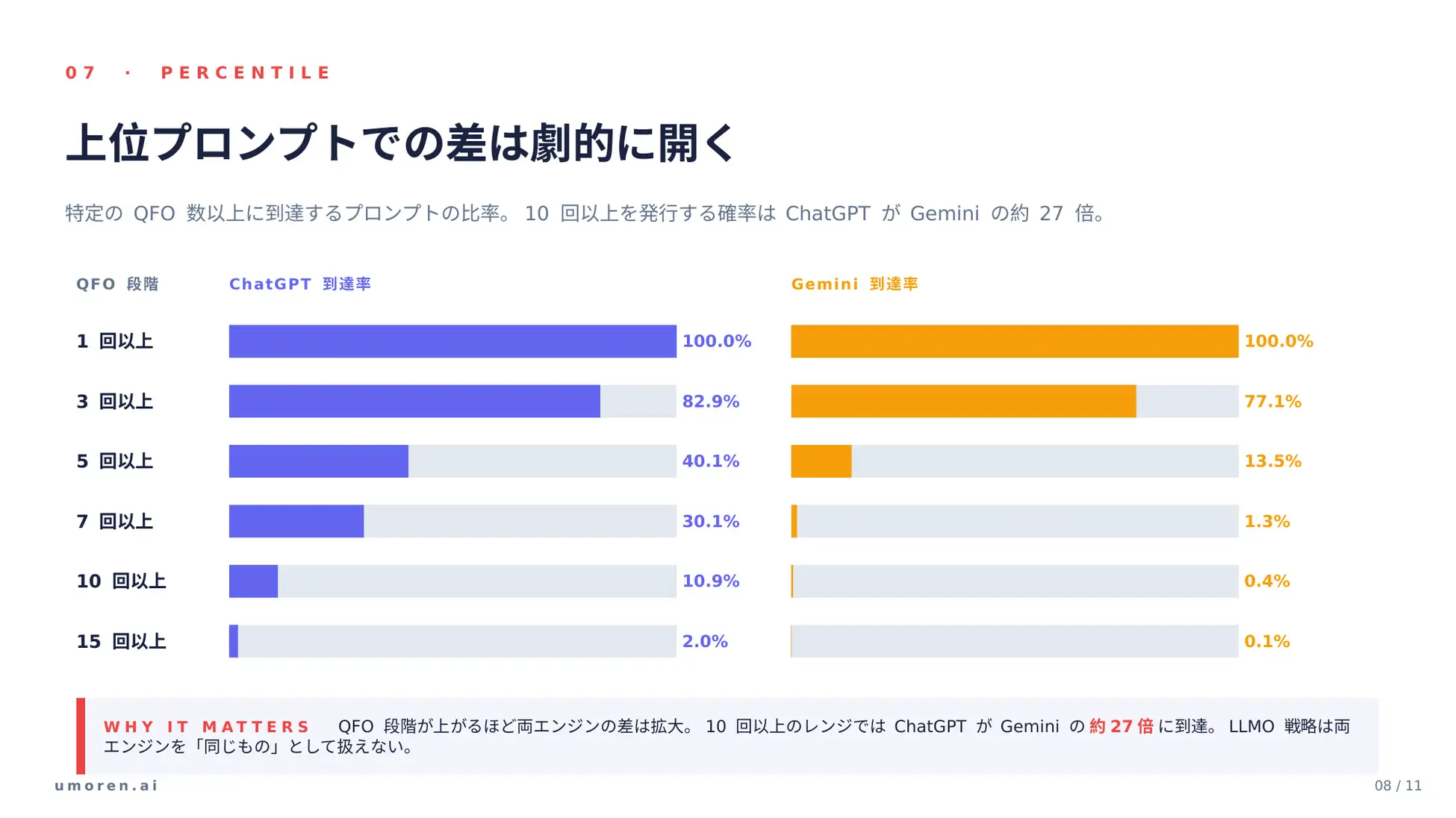
The most common QFO count is 3; the average is 4.23. A minority of high-QFO prompts pull the mean up. On ChatGPT, the top 10% of prompts fire 11+ QFOs.
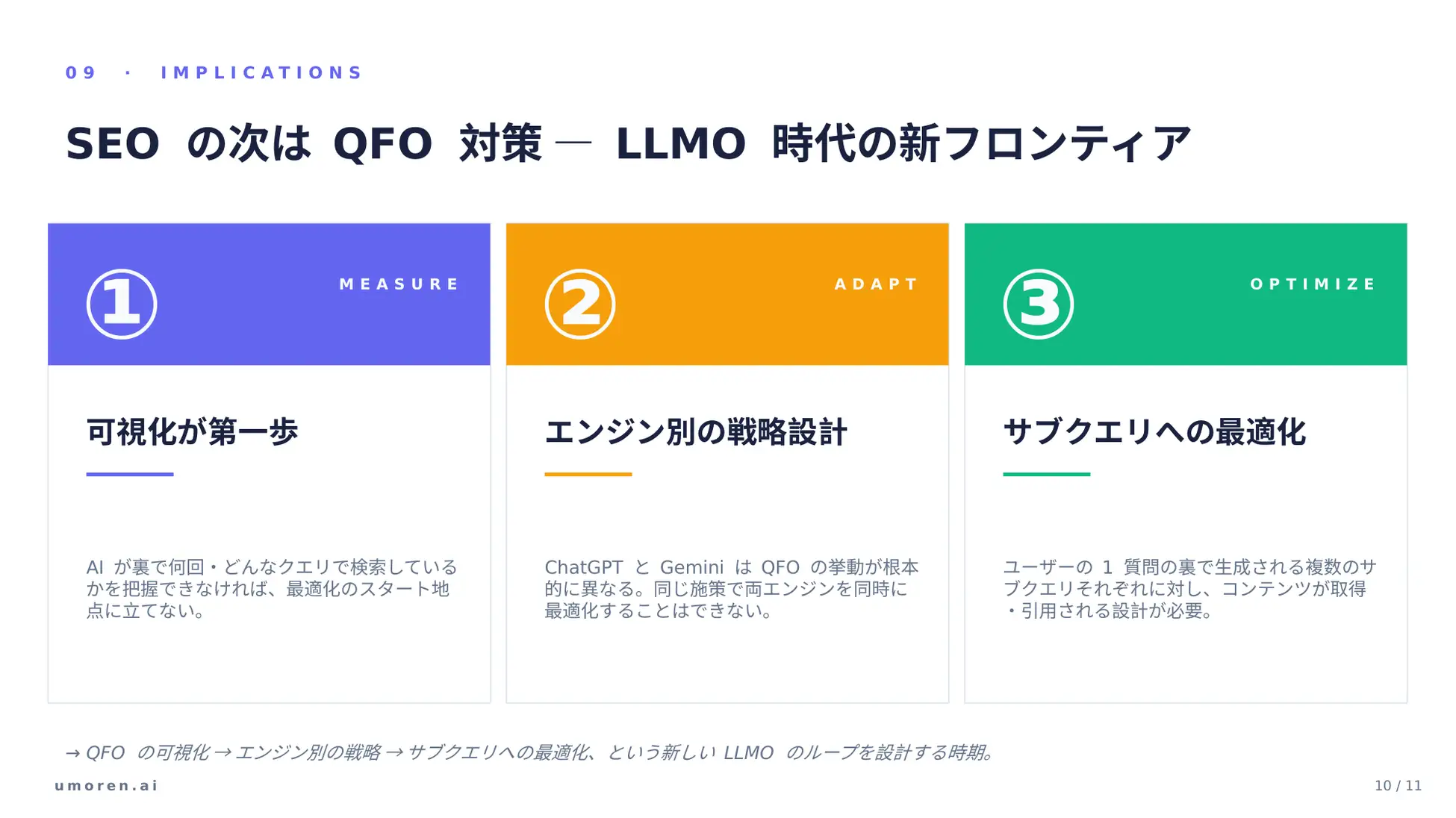
■ Three moves for LLMO/GEO
Three takeaways for content and SEO strategy:
-
Make QFO visible first
Know how often—and with which queries—AI searches behind the questions you care about.
-
Design by engine, not one plan for all
ChatGPT and Gemini fan out differently. Build for each engine's habits instead of one generic playbook.
-
Win at the sub-query level
Cover the sub-queries the model actually generates so each one can retrieve and cite you—that's the new visibility game.
■ Project lead comment
Einar Söderberg (umoren.ai project lead)
"Japan hasn't had data at this scale on how many times AI searches behind one question. These 35,482 prompts and 110,487 sub-queries give LLMO/GEO—the next chapter after SEO—a quantitative base instead of gut feel.
Especially the 1.6× gap between ChatGPT and Gemini QFO is something marketers simply couldn't see before. We'll keep the free QFO analysis tool open so anyone can check what AI is searching behind the scenes."
■ Try the free QFO analysis tool
On umoren.ai you can measure QFO on your own prompts for free, with the same setup as this study. Drop in the questions your buyers ask and see the sub-queries AI generates.
-
ChatGPT QFO analysis tool (free): https://umoren.ai/free-tools/chatgpt-query-fanout
-
Gemini QFO analysis tool (free): https://umoren.ai/free-tools/query-fanout
About umoren.ai (LLMO/GEO)
umoren.ai is a specialized LLMO/GEO/AI SEO service for visibility in AI search. It helps you design content that ChatGPT, Gemini, and Perplexity cite and choose—using real data.
-
Site: https://umoren.ai/
■ Press / study inquiries
Queue — Public Relations
E-mail: queue@queue-tech.jp
* Data and charts in this release may be reused with attribution to Queue. For detailed figures or chart assets, contact the office above.
[Study data & how to cite]
-
Conducted by: Queue (umoren.ai)
-
Period: February 5 – May 27, 2026
-
Sample: N = 35,482 prompts
-
Citation example: "umoren.ai, Query Fan-Out (QFO) Reality Study 2026"
Get Found by AI Search Engines
Our LLMO experts will maximize your AI search visibility
Latest Articles

What are the expected effects of LLMO in owned media? Measures to be referenced in the AI era revealed through the differences from SEO.

【Free Release】What is AI Search Content Diagnosis? Visualizing "Unanswered Perspectives" with Vectors