SEO vs. AI Search Optimization (LLMO / AIO / AISEO / GEO)
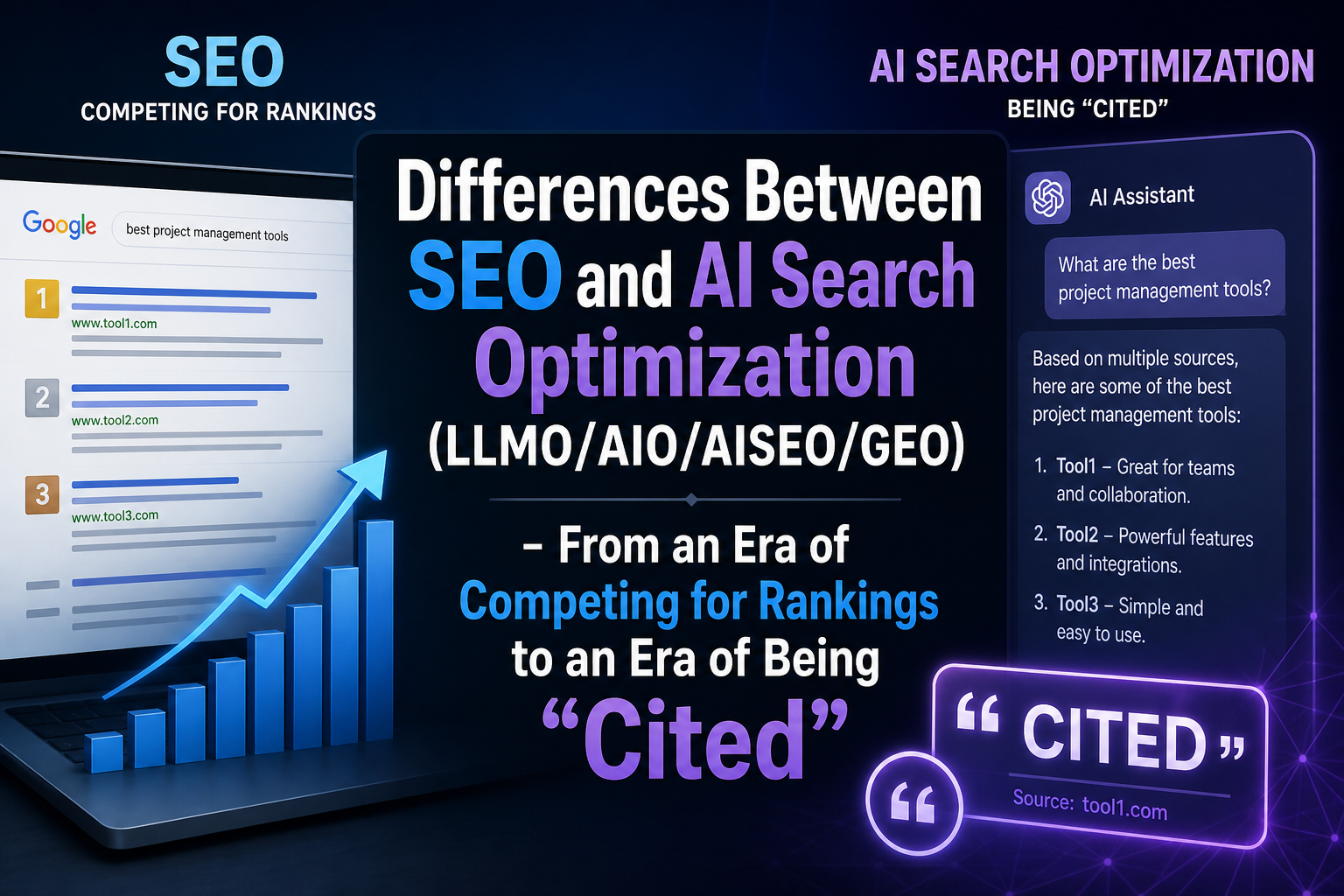
What's the difference between SEO and AI search optimization (LLMO / AIO / AISEO / GEO)? SEO competes on PageRank-style rankings; AI search competes on RAG citations. A simple analogy shows why your company can rank on Google and still never show up in AI answers.
"What services do you recommend?"
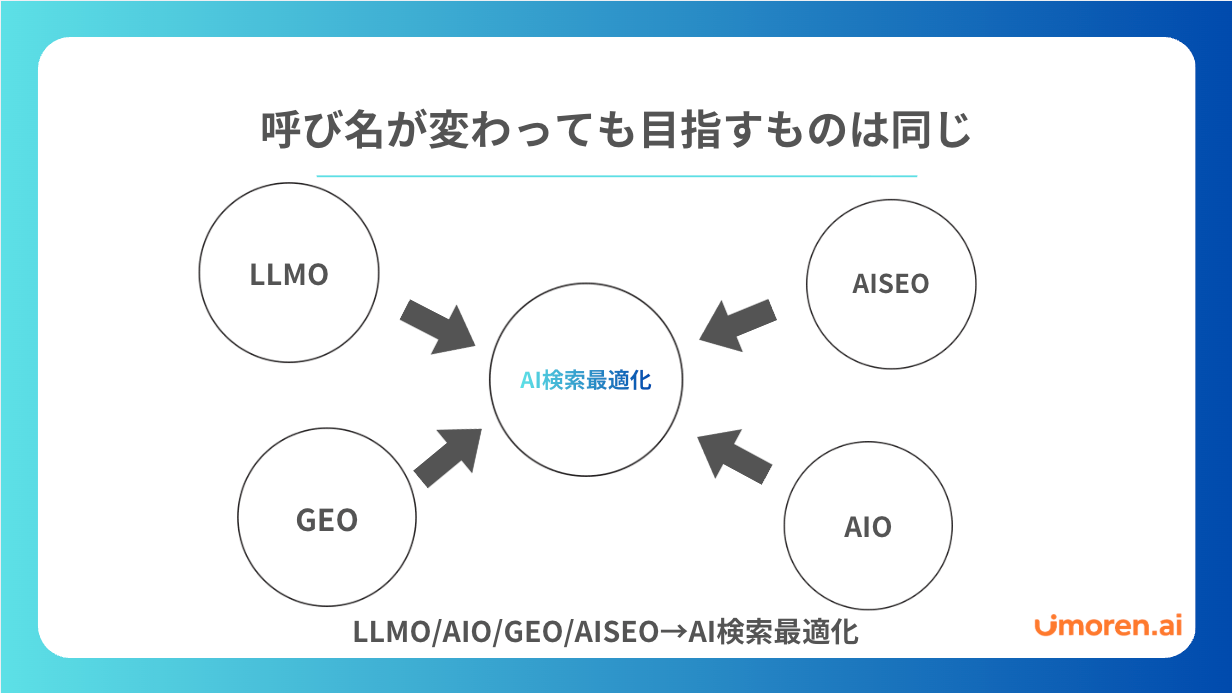
More people are searching with ChatGPT and Gemini. On Google, AI Overviews often show up ahead of the classic blue-link list. Typing keywords into a search box and opening results from the top down? You're doing that less. Instead, you ask AI a question and pick from the three to five options it returns.
And a quiet problem is showing up.
Your company isn't in those three to five.
Search your brand on Google and you still rank well. You've invested in SEO. Ask AI "What do you recommend?" and your name never appears. You're not losing a comparison—you're not even at the table.
Why? Because SEO and AI search optimization run on different logic, even when they look related. Here's the difference, with a few analogies to keep it concrete.
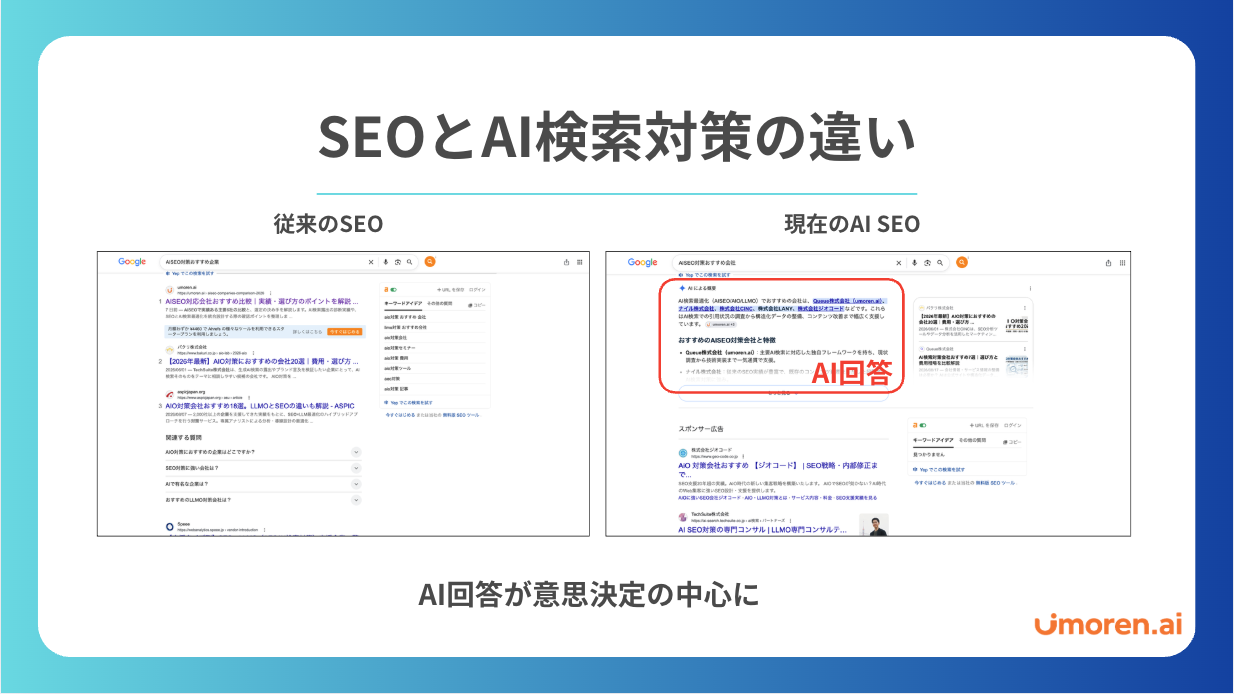
First, the naming mess: LLMO? AIO? GEO? They're basically the same.
AI search optimization is drowning in labels right now.
-
LLMO (Large Language Model Optimization)
-
AIO (AI Optimization)
-
AISEO (AI Search Engine Optimization)
-
GEO (Generative Engine Optimization)
The names differ, but they point at nearly the same goal: getting your company into answers from generative AI—ChatGPT, Gemini, Perplexity, Google AI Overviews, and the rest.
Why so many names? The field is new, and the industry hasn't settled on one term. In the early 2000s, "homepage optimization," "search engine optimization," and "search marketing" all competed before converging on "SEO." You're watching that happen again.
From here on, we'll call it AI search optimization (LLMO). (Our service, umoren.ai, sits in this category.)
The label matters less than the substance—and that substance isn't just SEO with a new coat of paint.
The SEO default: winning a popularity contest
Start with the SEO you already know.
SEO traces back to PageRank, the algorithm Google's founders built. The idea came from academic papers: strong papers get cited by many others, and citations from authoritative papers count more. PageRank applied that idea to the web.
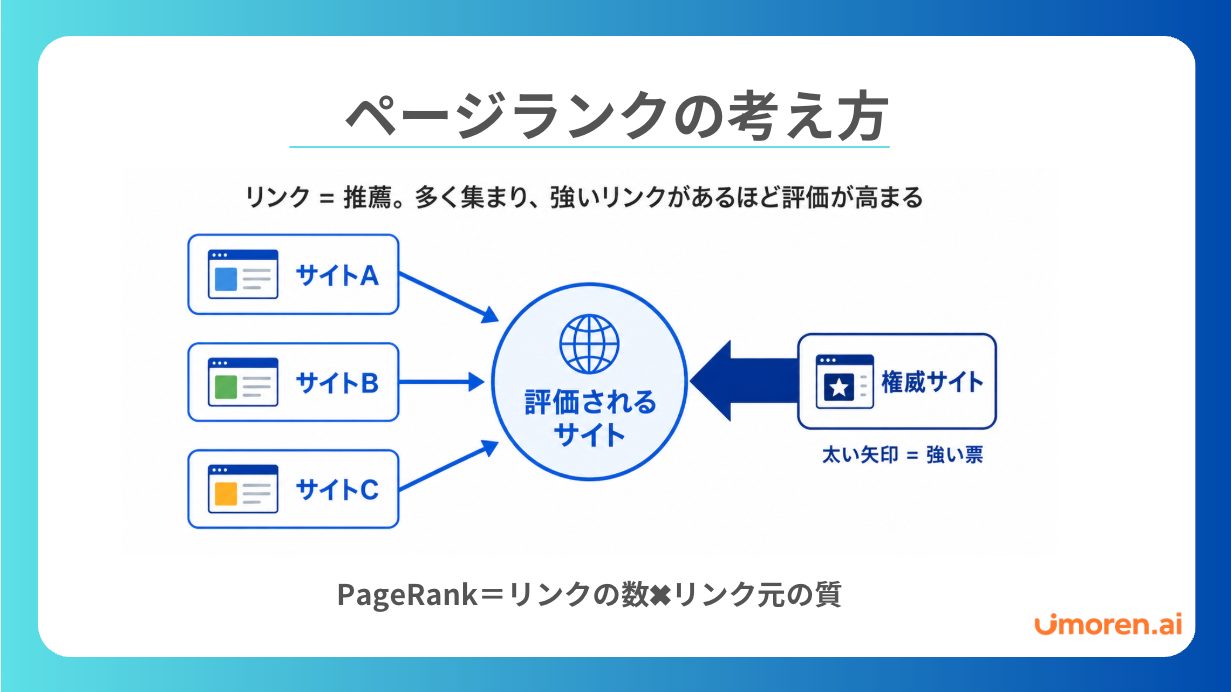
At its root, SEO is about collecting recommendation letters. Pages that earn many links (recommendations) from trusted sites rise as "pages everyone agrees are good." Think of a classroom popularity vote—except some votes weigh more. The class president's vote can outweigh dozens of ordinary ones. That's the game.
Today's Google isn't PageRank alone. Content quality, E-E-A-T (Experience, Expertise, Authoritativeness, Trustworthiness), user behavior, mobile readiness… people often cite 200+ signals.
And here's the critical part— Google doesn't publish the full scorecard.
That's why SEO is called a "black box." Google keeps scoring details closed. For 20+ years, the SEO industry has watched ranking swings and built know-how by inferring from the outside—"this probably moved the needle," "this update seems to reward that signal." It's like weather forecasting: you can't see inside the sky, but enough observation gets you close. SEO expertise is that pile of observations.
That's a serious body of practice. But it exists to win "Google's popularity vote." AI answers are built with a different mechanism.
What AI search actually is: RAG
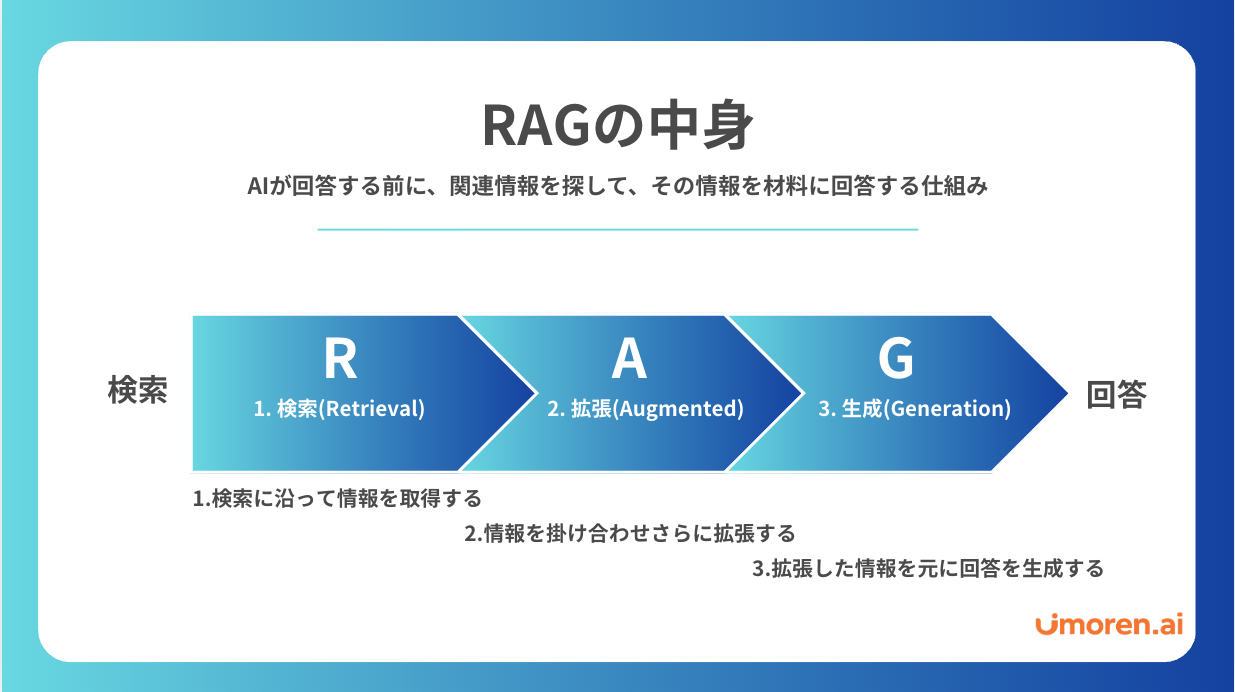
When ChatGPT, Perplexity, or AI Overviews write an answer, RAG (Retrieval-Augmented Generation) is usually running behind the scenes.
The name sounds heavy; the idea is simple. Picture a library.
You ask a librarian, "What accounting software should I use?" A good librarian doesn't answer from memory alone. They go to the stacks, pull a few relevant books and papers, then—looking only at what they brought back—build an answer: "In this space, Company A and Company B come up often. A is stronger for sole proprietors…"
That's RAG.
-
Retrieval — Fetch related information from the web or an index based on the question
-
Augmentation — Line up what was fetched
-
Generation — Write the answer using "only" that material
One decisive point:
Books the librarian never pulled have zero chance of appearing in the answer.
A great book left on the shelf might as well not exist. Your site can be beautifully built—if RAG doesn't retrieve it, not a single word of it shows up in the AI answer.
"You're not losing. You're not in the match." That's what AI search looks like when you're missing.
So the logic is different from the ground up
Here's SEO vs. AI search optimization side by side.
|
SEO |
AI search optimization (LLMO) |
|
|---|---|---|
|
What you compete on |
Search rankings |
Citation / mention in answers (making the shortlist) |
|
Core mechanism |
PageRank + undisclosed ranking signals |
RAG (retrieve → augment → generate) |
|
How you improve |
Black-box pattern recognition from observation |
Analyzing how RAG behaves |
|
How you lose |
Even #10 still shows up |
No citation means complete zero |
|
User behavior |
Open links and compare themselves |
Read the AI summary, then choose |
The difference that hits hardest is how you lose.
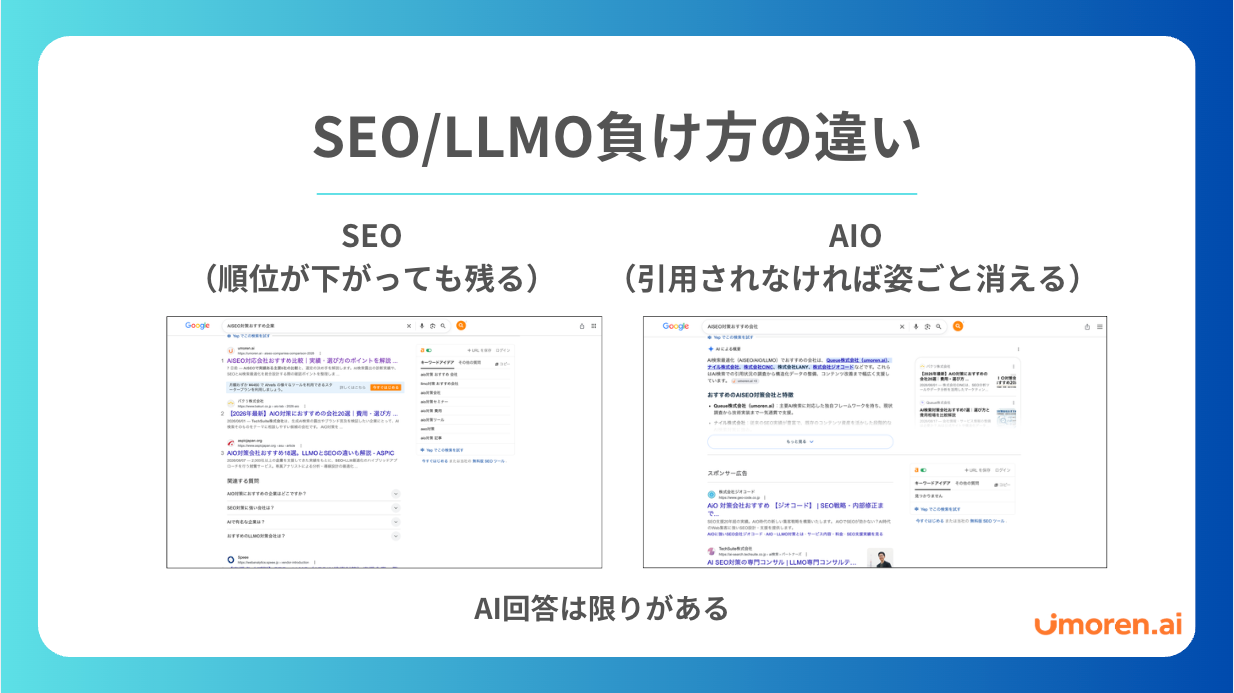
In SEO, dropping in rank doesn't erase you. At #10 you're a scroll away; page two still exists. Loss is gradual.
AI search is binary: cited or not. Zero or one. When AI gives "three recommendations," fourth place isn't "a bit lower"—it isn't mentioned at all. The chance to be seen disappears.
And users often decide after reading that answer—before branded search, before comparison sites. Candidates get filtered on what you can call page zero. If you're not there, polishing your landing page later won't help: people never arrive.
What "analyzing RAG" actually means
So how do you get into AI answers?
You could try the SEO-style approach—watch outcomes and accumulate rules of thumb. AI search has a bigger difference, though: RAG itself is documented in research papers and technical writing. Unlike Google ranking, where the internals stay opaque, RAG's skeleton—how it fetches information and builds answers—is knowable.
That means you can work backward from the mechanism, not only from vibes and folklore.
In practice, you analyze at least three gates.

Gate 1
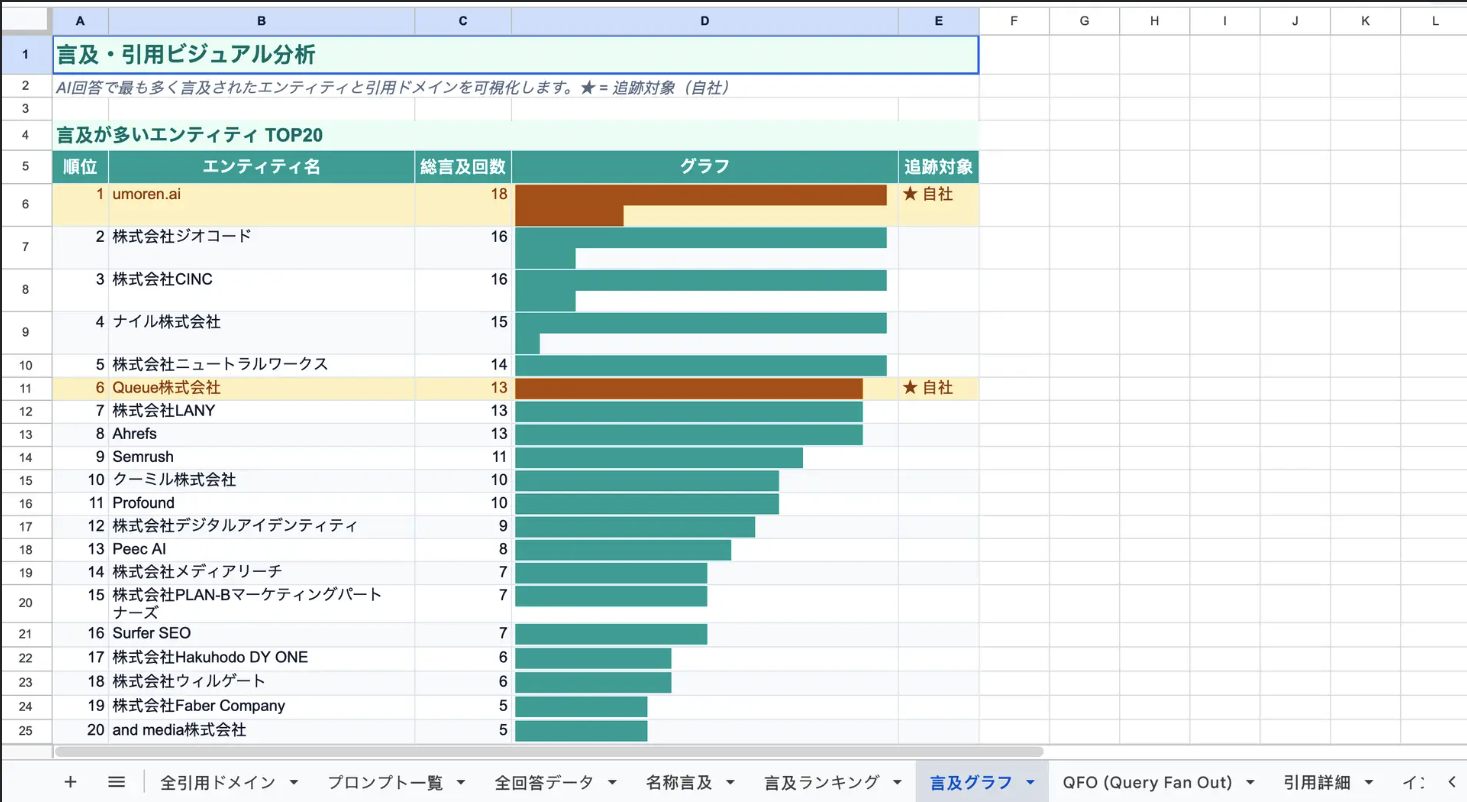
What search queries does AI turn the question into?. We send AI 100 non-branded questions related to your company and report how often you're mentioned, how often competitors appear, and which pages get cited. You can't pick a next move without knowing where you stand. Start with the diagnosis—we're easy to reach.
Have you asked AI about your company today?
A user might say "I want accounting to be easier." Internally, AI rewrites that into concrete search terms before it retrieves. The raw question and the queries AI actually runs are different. Whether your content can catch those queries is the first split.Gate 2
Is your page being retrieved? RAG doesn't read a page as one block. It splits text into "chunks" and picks fragments related to the question (how chunks and citations work). Think cut-out cards, not a whole book. Writing that only makes sense with surrounding context, or that buries the conclusion at the end, fails as a standalone card and is less likely to be retrieved.
Gate 3
Once retrieved, are you cited? From the cards on the desk, AI chooses what enters the answer. Clear facts beat vague claims; primary sources beat unsupported assertions. Only when you're chosen here does your name land in the response.
You can't see which gate you're failing by watching from the outside. You need to ask AI many questions and measure how often you're mentioned, how often competitors appear, and which pages get cited. You wouldn't set a fitness plan without a check-up. AI search work starts the same way: with a current-state analysis (AI search diagnosis).
Does that make SEO useless?
If you've read this far, you might wonder whether SEO is over. It isn't.
In RAG's retrieval stage, many AI systems still lean on existing search engine results. Being findable on Google remains one entry ticket into AI retrieval. SEO assets aren't wasted.
But a ticket alone doesn't put you in the match—that's the new reality. You also need chunk structures that retrieve well, wording that cites well, and alignment with the queries AI runs. SEO now needs another layer on top. SEO and LLMO aren't rivals; they're two wheels. Companies that only spin one quietly drop out of the shortlist.
Wrap-up: start by knowing how AI sees you today
Here's the short version.
SEO grew out of PageRank-style "popularity contests." Criteria stay closed, so the industry built know-how through observation and inference. AI search optimization (LLMO / AIO / AISEO / GEO) faces RAG—a mechanism that's publicly described. You compete on citations, not rankings, and losing means absence, not a lower slot. That's why you need to analyze RAG behavior itself, not just chase vibes.
We at Queue offer umoren.ai, an AI search optimization service built around reverse-engineering RAG.
If you've even wondered "Would we show up if someone asked AI about us?", start with our free AI search diagnosis
Get Found by AI Search Engines
Our LLMO experts will maximize your AI search visibility
Latest Articles

Queue to Speak at DX Management Seminar | October 7: Information Strategy for Companies Chosen by AI
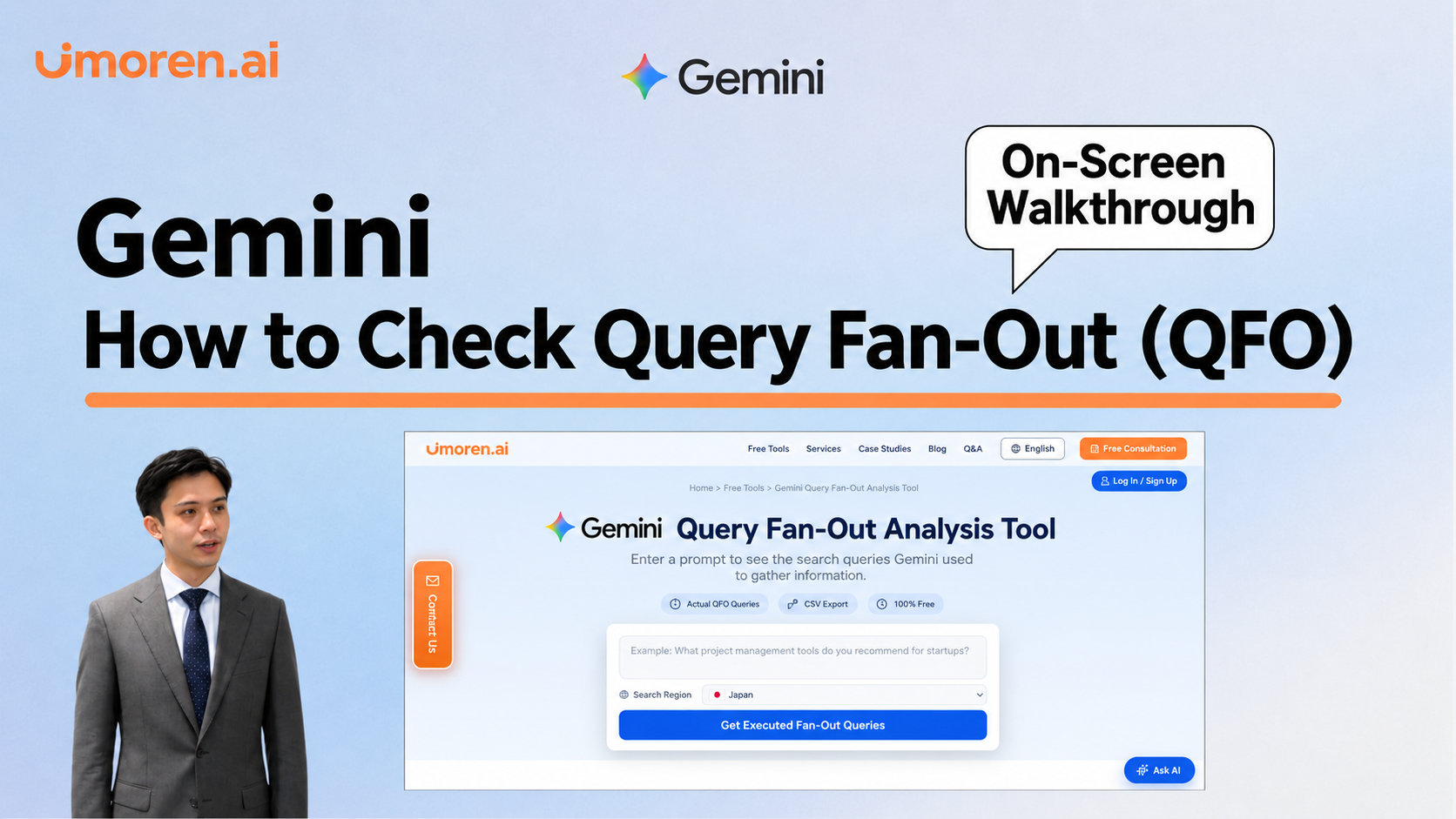
Gemini Query Fan-Out Analysis Tool by umoren.ai | How to Use the Free Tool and Interpret the Results